Showing posts with label worst president in US history. Show all posts

Tuesday, December 30, 2008

The Bush Legacy -- a Reality Check

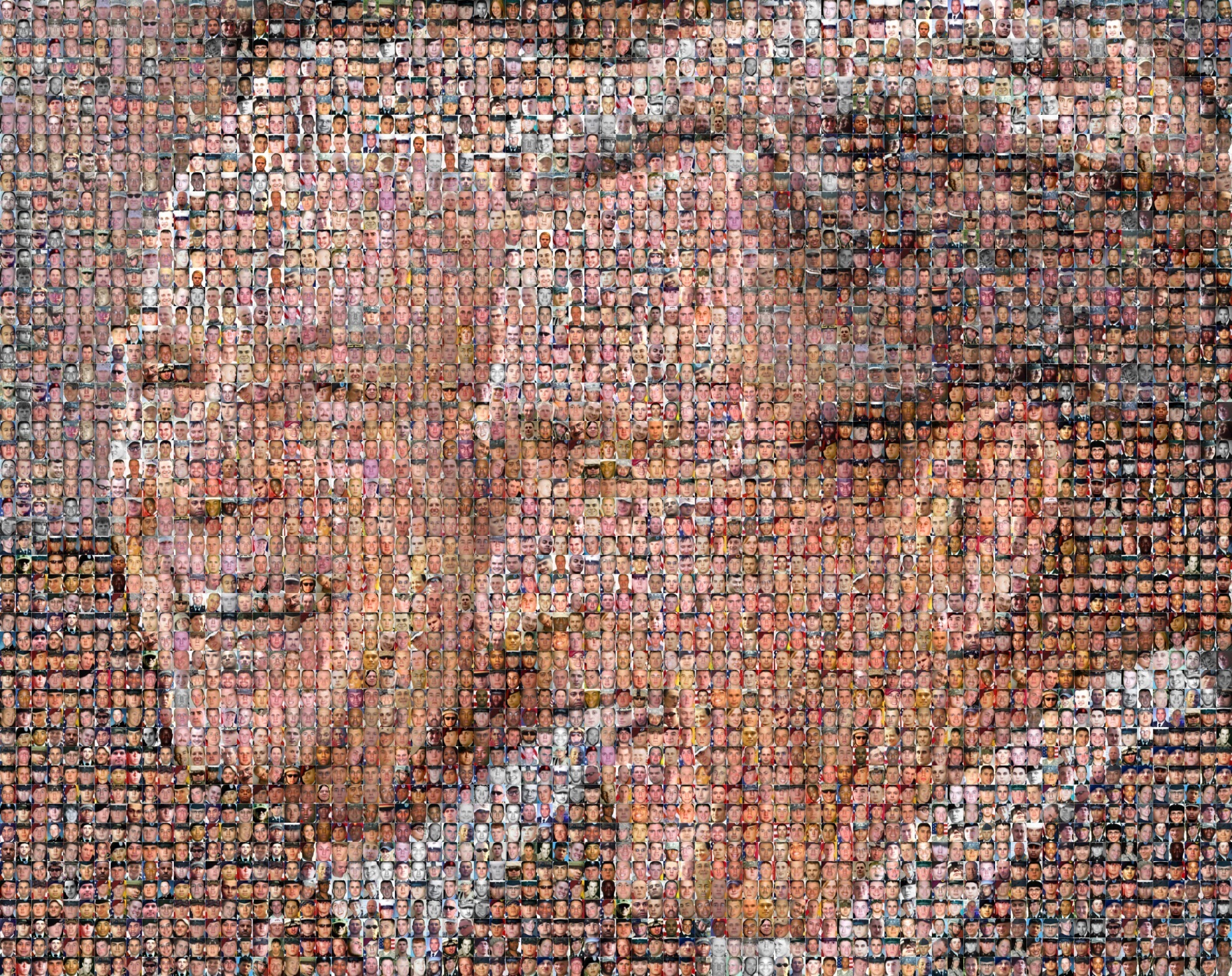
The "legacy" of the Bush presidency is one of failure -- failed policies, failed worldview, failure to uphold the Constitution, failure to respect the will of the people -- utter failure.

This legacy includes:

On the plus side, perhaps we'll see, as a result of Bush's disastrous presidency, an attenuation of

This is just scratching the surface. We're only up to May of 2005. More to follow as the Bush presidency dwindles.

Monday, September 15, 2008

An E-Mail Exchange With Howie, My (Far) Right-Wing Friend in NY: Is There, or Is There Not, a "Bush Doctrine?"

Howie: Basically, the term "Bush Doctrine" was coined by Charles Krauthammer, and I sent you his article that "suggested that the Bush administration policies of unilaterally withdrawing from the ABM treaty and rejecting the Kyoto protocol, together with others, amounted to a radical change in foreign policy that should be called the Bush doctrine."

Me: Howie, you're killing me with this. There are so many more important things I ought to be doing with my time than trying to persuade you that a pit-bull is not a pig and that a horse is not a house and that fantasy is not reality. It is, I believe, a powerful testimony of my unfailing love for you that I go to all this trouble. I only wish you had any respect for me -- and for yourself -- and took the world more seriously.

I did a Lexis-Nexis search (it is a subscription database of, among other things, US and world newspapers, newsmagazines, and radio and television news transcripts which I have access to through Roosevelt's library) of the phrase "Bush Doctrine" for all the time between June 2002 and August 15, 2008. In other words, it does NOT search anything AFTER the Palin interview. I got over 1000 results. Please read them carefully. Here's my disclaimer, though: I'm only copying the essential parts of each story, where the term "Bush Doctrine" is used specifically. And, since this is a subscription service, I can't give you any hyperlinks. I urge you to go to a library and get a copy of each if you want to read the whole article.

Here's the very first one, from the Sydney (Australia) Morning Herald:

  • Kill first, ask questions later

BYLINE: Robert Manne. Robert Manne is associate professor of politics at La Trobe University.
SECTION: NEWS AND FEATURES; Opinion; Pg. 13 LENGTH: 966 words
September 30, 2002
Monday Late Edition

The black holes in Bush's logic might suck us all in.TEN days ago,
George Bush handed to the Congress a document of fundamental importance, outlining a new military doctrine for the United States.

The new doctrine argues that in the 10 years following the Soviet collapse, the US failed to grasp the nature of the threats posed by the post-Cold War world. With the terrible events of September 11, America awoke.

At first, the US characterised the new enemy it faced as "terrorism". Later, it refined the idea of the new enemy to "terrorism with a global range", a euphemism for the
kind of terrorism with the capacity to inflict harm on the civilian populations in America or the West.

Since the shock of September 11, the new enemy has expanded to include what have been called "rogue states". In the
Bush doctrine, a rogue state is a regime which brutalises its own people, seeks to acquire weapons of mass destruction and expresses hatred for the US...We arrive here at the heart of the new Bush military doctrine. The US, it is claimed, presently faces the prospect of
attack either from one of the rogue states or from a terrorist group supplied by
them with weapons of mass destruction. Before this kind of threat, Cold War
ideas about deterrence and containment are obsolete. The only rational military strategy is the "pre-emptive strike".

Here's one from the Straits Times (Singapore) from October of 2002 (first two paragraphs):

  • Dubya's dangerous and divisive doctrine

October 16, 2002 Wednesday
AMITAV ACHARYA

THE new American strategic doctrine of pre-emptive strikes, enunciated a year after Sept 11, provokes more discord internationally than it catalyses accord domestically.

Past presidential doctrines helped American leaders mobilise domestic support and organise international coalitions. The Bush Doctrine is the most divisive post-war pronouncement.

From the Washington Post, October 2003 (I'm copying the entire article, as it directly references the Bush Doctrine several times, and even quotes Richard Perle -- one of the neo-cons who created it through his work at PNAC -- directly referring to the Bush Doctrine as preemptive first strike):

  • The 'Bush Doctrine' Experiences Shining Moments

December 21, 2003 Sunday Final Edition

BYLINE: Dana Milbank, Washington Post Staff Writer

SECTION: A Section; A26LENGTH: 1041 words

It has been a week of sweet vindication for those who promulgated what they call the Bush Doctrine.

Beginning with the capture of Saddam Hussein a week ago and ending Friday with an agreement by Libya's Moammar Gaddafi to surrender his unconventional weapons, one after another international problem has eased.

On Tuesday, the leaders of France and Germany set aside their long-standing opposition to the war in Iraq and agreed to forgive an unspecified amount of that country's debt. On Thursday, Iran signed an agreement allowing surprise inspections of its nuclear facilities after European governments applied intense pressure on the U.S. foe. On Friday, Libya agreed to disarm under the watch of international inspectors, just as administration officials were learning that Syria had seized $23.5
million believed to be for al Qaeda.

To foreign policy hard-liners inside and outside the administration, the gestures by Libya, Iran and Syria, and the softening by France and Germany, all have the same cause: a show of American might.

Those who developed the Bush Doctrine -- a policy of taking preemptive, unprovoked action against emerging threats -- predicted that an impressive U.S. victory in Iraq would intimidate allies and foes alike, making them yield to U.S. interests in other areas.

Though that notion floundered with the occupation in Iraq, the capture of Hussein may have served as the decisive blow needed to make others respect U.S. wishes, they say. "It's always been at the heart of the Bush Doctrine that a more robust policy would permit us to elicit greater cooperation from adversaries than we'd had in the past when we acquiesced," said Richard Perle, an influential adviser to the
administration. "With the capture of Saddam, the sense that momentum may be with us is very important."

Perle had provoked much criticism for saying a successful U.S. invasion of Iraq would signal to other foes that "you're next." But he said the actions by Libya and Iran prove that the threat alone was sufficient to produce action. "Gaddafi surely had to take more seriously that we would not allow him to get away with the programs he was embarked," he said.

Perle and the other "neo-conservative" hawks whose views dominate the Bush administration know better than to claim victory. Gaddafi or the Iranians may still cheat despite admitting inspectors. And other potential foes, notably North Korea and China, have shown little susceptibility to the threat implicit in the Bush Doctrine.

Still, Perle allowed, "it's nice to have a good week every once in a while."

Bush's domestic adversaries have had some trouble responding to the administration's diplomatic successes. Sen. John F. Kerry (D-Mass.), a presidential aspirant, portrayed the success with Libya as an exception to the Bush Doctrine. "Ironically, this significant advance represents a complete U-turn in the Bush administration's overall foreign policy," he said in a statement Saturday. "An administration that scorns multilateralism and boasts about a rigid doctrine of military preemption has almost in spite of itself demonstrated the enormous potential for improving our national security through diplomacy."

But Bush's supporters say it is precisely his willingness to go it alone and take preemptive action that has encouraged other countries to seek diplomatic solutions before the United States launches a military attack. The Libya and Iran concessions "show the peripheral benefit of preemption," said Kenneth Adelman, a Reagan administration arms control official who now serves on a Pentagon advisory panel. "Most of all it scares the bejesus out of rogue dictators." As for stubborn allies such as Jacques Chirac and Gerhard Schroeder, "they pay more attention when there's a forceful U.S. policy," Adelman said.

It is unlikely, of course, that France or Germany would acknowledge that they are reacting to U.S. strength. Yet it is noteworthy that they were conciliatory on the issue of Iraqi debt forgiveness after Hussein was captured -- even though they were complaining bitterly just a week before about a Bush plan to exclude them from U.S.-funded Iraq reconstruction projects.

And it is inarguable that Germany and France have taken a more active role in winning Iranian compliance with weapons inspections since the United States invaded Iraq. The foreign ministers of Germany, France and Britain visited Iran in
October, overcoming Iran's longtime resistance to signing a monitoring agreement.
"The Europeans never would have taken these steps [in Iran] without Bush taking the steps he took in Iraq," said Gary Schmitt, who directs the hard-line Project for the New American Century. "The Europeans don't want us to do another Iraq there, so they're rushing in to get a deal. Bush gets an immense amount of credit for laying out what the agenda is and making others step up to the plate."

Bush still has some inconsistencies to work out with his doctrine. Earlier this month, he drew rebukes from conservatives for undermining democratic Taiwan to win favor with totalitarian China. And, as Bush's domestic opponents point out, he has been contradictory in his views of international organizations. Rep. Edward J. Markey (D-Mass.) said the administration's support for International Atomic Energy Agency inspectors in Libya and Iran "is difficult to reconcile with the administration's previous ridicule of IAEA inspectors in Iraq."

But such complaints, at least for now, have been overshadowed by the results achieved with Iran and Libya. That was the clear message Bush delivered in his unusual appearance late Friday in the White House briefing room. Mentioning the fate of Hussein, Bush said, "These actions by the United States and our allies have sent an unmistakable message to regimes that seek or possess weapons of mass destruction."

If Bush was oblique, a senior aide who briefed reporters after the president's statement, was quicker to take credit. "The outcome today is a response [to] the policies that we have pursued," he said. The official said the secret discussions with Libya began in March -- when the invasion of Iraq started. "I can't imagine that Iraq went unnoticed by the Libyan leadership," the aide said.

And -- WOW!!! -- I actually found a reference to the phrase "Bush Doctrine" that links it directly to the White House and the Bush administration, and dates it as far back as October 2001.

  • 'Bush Doctrine' sets up rules of engagement

USA TODAY
October 9, 2001, Tuesday, FIRST EDITION
BYLINE: Laurence McQuillanSECTION: NEWS; Pg. 8A LENGTH: 526 words DATELINE: WASHINGTON

WASHINGTON -- White House officials gave a name Monday to the rules of engagement driving the U.S. war on terrorism -- the "Bush Doctrine." The policy makes any nation or group that tolerates terrorists a potential target.

From the Toronto (Canada) Globe and Mail:

  • Monroe, Truman and Bush?; U.S. leader aims to become only the third; chief to lay a foreign-policy cornerstone

The Globe and Mail (Canada)
October 20, 2001 Saturday
BYLINE: JOHN IBBITSON SECTION: INTERNATIONAL NEWS; The War on Terror: THE BATTLE OF IDEAS; Pg. A10 LENGTH: 751 words

DATELINE: WASHINGTON

There was the Monroe Doctrine. There was the Truman Doctrine. Now, there is the Bush Doctrine.

In his Sept. 20 speech to Congress, U.S. President George W. Bush declared that all nations must either join the United States in combatting terrorism, or be its enemy. He said the government would act against any individual, organization or state "of global reach" that supports terrorism.

In the weeks since, Mr. Bush has referred to "the doctrine I spelled out to the American people." Vice-President Dick Cheney invoked "the Bush Doctrine" in a rousing call to arms Thursday evening.

Coalition forces are attacking Afghanistan in the air and now on the ground in the name of the Bush Doctrine. A growing chorus of politicians demands that the United States attack Iraq in the name of the Bush Doctrine.

From the Boston Globe and the Australian Financial Review on the global political implications of the Bush Doctrine, from October and December of 2001, respectively:

  • A DOUBLE STANDARD IN WAR ON TERRORISM?

The Boston Globe
October 24, 2001, Wednesday ,THIRD EDITION
BYLINE: By Scot Lehigh, Globe Staff SECTION: OP-ED; Pg. D7 LENGTH: 699 words

IF YOU WISH to converse with me, Voltaire said, define your terms.

In speaking to the world, President Bush needs to do just that, for his zero-tolerance antiterrorism doctrine is one that both friends and rivals clearly hope to appropriate for their own purposes.

Consider our newfound comrade Vladimir Putin, the Russian president. Noting that the Kremlin considers the Chechen separatists to be terrorists with ties to Osama bin Laden, he has declared that the United States and Russia share a common foe.

Or Prime Minister Ariel Sharon of Israel, who called Palestinian leader Yasser Arafat Israel's Osama bin Laden. Why, with America drawing a line in the sand against terrorism, should Israel be pressured to negotiate with a man who has sponsored and encouraged terrorists, he asked?

A bit less vocal was India, which faces attacks by Islamic militants hoping to pry all of disputed Kashmir away. "If the US can strike Afghanistan after the Sept. 11 attacks ... why can't we take similar action against terrorists harbored by Pakistan?" wondered Farooq Abdullah, Kashmir's chief minister. Orwellian China would just as clearly like the world to view Tibet through the lens of the Bush doctrine, while Malaysia has used it to justify a suppression of peaceful dissent. And that's just for starters.

  • Bush Doctrine suddenly crystallises

The Australian Financial Review
December 10, 2001 Monday
BYLINE: Peter Hartcher SECTION: Pg. 1/11. LENGTH: 99 words

The US President, George W Bush, has won huge support for his stand against terrorism. Bush has established a doctrine that holds all countries that harbourterrorists as being accountable to the US. Bush has declared that for every country that support terrorists there will be a "day of reckoning". Governments around the world have received a warning from what has happened in Afghanistan.

The war in Afghanistan having almost reached a conclusion, the US Government must decide in which country its forces will seek terrorists next. An attack on Saddam Hussein's regime in Iraq appears imminent.

Howie (and all my other right wing friends out there), I know you. I don't expect any of this to change your (for lack of a better word) "mind." But you are wrong about this, you are being deceived by post-game spin, and nothing you say or do or believe can EVER change history. There is a Bush Doctrine, it was promulgated by the White House, it has been debated and discussed in terms of its implications for foreign policy and for global politics, and neither Sarah Palin nor you seems ever to have heard of it.

The GOP and right-wing spinmeisters might indeed be successful persuading those American people who choose ignorance over information, and who choose to be led around on a leash by the right-wing media that there are "several Bush Doctrines," but history has already recognized one.

And that's really all there is to it. A century from now people will be studying the Bush Doctrine, and what they'll be studying is this dangerous principle of the preemptive first strike.

There's nothing you can do to change that.

Thursday, September 04, 2008

Republican National Convention, Night Four

Update #1, 8:10 pm (CDT): Lindsay Graham is a creepy, lying twit. More to follow.
Update #2, 7:00 am (CDT) 9/5/08:

I am profoundly ambivalent about this post, and this is one of the reasons why I waited until this morning to sit down and write. I needed to let last night's speech roll around in my head and try to figure out what, exactly, it meant to me. I don't think the Republicans sitting in the convention hall in St. Paul had this reaction; indeed, that is one of the defining differences between Democrats and Rpublicans.

There is this kind of knee-jerk, "America first," my-country-right-or-wrong thing that many Americans have grown up calling "patriotism" that isn't necessarily patriotism at all. The Republican Party is filled with people these days who have exactly this definition of patriotism. But that's not necessarily what patriotism actually is. In fact, the type of love-it-or-leave-it, USA!USA!USA!-chanting patriotism that we've experienced since the Reagan years is what is ultimately behind the crippling partisanism we're suffering through right now. Country, rather than principle, can become an ideology, and when that happens, bad things usually follow. As David Hume said, "The heights of popularity and patriotism are still the beaten road to power and tyranny; flattery to treachery; standing armies to arbitrary government; and the glory of God to the temporal interest of the clergy." That's what Democrats are against. That's what I'm against, and I'm going to keep talking about it, beacuse as Barbara Ehrenreich has told us, "No matter that patriotism is too often the refuge of scoundrels. Dissent, rebellion, and all-around hell-raising remain the true duty of patriots."

So let me raise some hell.

John McCain is an upstanding guy and a true patriot. I remember when he returned with other POWs at the end of the Vietnam war. I remember -- even though I had shifted from staunchly pro-war to vehemently anti-war between 1968 and 1972 -- being in awe of his courage and strength having endured imprisonment, isolation, and torture for so long. It's not something I think I could have endured myself without breaking, dying, or losing my mind.

But John McCain is not the right man for this job, not now. I would have been quite satisfied (though not happy) if he had won the GOP nomination in 2000 and beat Al Gore in the general election to become President. Because unlike George W. Bush (whose disgusting campaign, engineered by talking pig Karl Rove, smeared and abused McCain and his family), John McCain is a decent man.

So last night, whenever he talked about his experiences as a POW, I was moved and silent. I will never lose my respect or my gratitude for John McCain for enduring what he did in Vietnam.

But when he talked about the things he really stands for, I found myself yelling at the television, "NO! He can't be our next president."

These are tough times for many of you. You’re worried about keeping your job or finding a new one, and are struggling to put food on the table and stay in your home. All you ever asked of government is to stand on your side, not in your way. And that’s just what I intend to do: stand on your side and fight for your future.

Except that this is not true. That is exactly not what John McCain intends to do. It has become very clear that John McCain -- either cynically, or through mis-placed faith -- intends to maintain the same neo-liberal economic policies that have so many people worried about keeping their jobs, finding a new one, and struggling to put food on their tables and stay in their homes.

McCain is still a dyed-in-the-wool supply-sider who believes in lower taxes (this is NOT as great as it sounds, since -- as we've seen in the last eight years -- the middle class don't really benefit much from a $200 break in their taxes, but the wealthy do; and all the while the government has less revenue to serve its citizens), incentives for investment (big investors are STILL making money while most Americans are sucking wind), the removal of "barriers" to trade, and "free and open" (i.e., unregulated) markets -- which will mean even more jobs being moved overseas.

Let's be honest: for all they tried to hide it this week, this is still the Republilcan Party. And John McCain may be running as "the Anti-Bush," but he's still a Republican. And these are, since the Reagan years, core Republican values. Not the welfare of the Aerican people, but the welfare of American business.


I fought for the right strategy and more troops in Iraq, when it wasn’t a popular thing to do. And when the pundits said my campaign was finished, I said I’d rather lose an election than see my country lose a war.


Thanks to the leadership of a brilliant general, David Petraeus, and the brave men and women he has the honor to command, that strategy succeeded and rescued us from a defeat that would have demoralized our military, risked a wider war and
threatened the security of all Americans.


The 800 pound elephant in the room, the man behind the curtain, the dirty secret behind this example of pretty-dog-gone-effective propaganda is that "the surge" has not worked. It is not working as we speak. And as we will find out on October 1, it will never work. When will we, in our culture-centric, teflon-coated, chrome-plated, fossil fuel-consuming bubbles admit to ourseves that Iraq is not America, Iraqis are not Americans (or even Europeans), western techniques does not equal eastern technique, our values are not their values?

Let me tell you why the surge isn't working.

At about the same time that John McCain (and Joe Lieberman) was supporting George W. Bush's request to send an additional 5 brigades to Iraq, the US military was negotiating with Sunni fighters (who made up the bulk of the insurgency) to stop fighting with us. Many of the Sunni fighters belonged to what are called "Awakening Councils, " regional quasi-political/religious groups who feared and resented the US-backed creation of a Shiite government. The US military managed to negotiate a semi-official status for the Sunni Awakening groups with the Shiite-led Iraqi Government.

Regional Awakening Groups now police local areas and each member gets paid a monthly stipend by the US Government of about $30 per month -- and in Iraq right now, that's a lot of money. So there has been, during the same time the "surge" has been in place, both a pragmatic compromise giving political legitimacy to groups that are, for all intents and purposes, sectarian militias, and a financial incentive not to kill Americans to the 100,000 (and growing) members of the Awakening groups.

But that will all end on October 1, when direct responsibility for, and authority over, the Sunni Awakening Councils will pass from US hands to the Shiite-controlled Iraqi government. There will be an almost immediate upturn in violence, because the Shiites never saw recognition of the Awakening groups as anything more than a stop-gap measure in helping the US military appear to be gaining control so that a timetable for withdrawal could be set. Their semi-official status will disappear, as will their stipends, and they will return to attacking Shiites and US troops.

The docile US mass media will report it as the US Government describes it -- not as a failure of the surge, but as some "new" problem between "extremists" or "terrorists" and the "legitimate government of Iraq." But make no mistake about it -- the regional, tribal, and sectarian hatred that was unleashed the moment we invaded Iraq and deposed Saddam Hussein never went away as a result of this "surge," and has not abated as a result of it.

I fight to restore the pride and principles of our party. We were elected to change Washington, and we let Washington change us. We lost the trust of the American people when some Republicans gave in to the temptations of corruption. We lost their trust when rather than reform government, both parties made it bigger. We lost their trust when instead of freeing ourselves from a dangerous dependence on foreign oil, both parties and Senator Obama passed another corporate welfare bill for oil companies. We lost their trust, when we valued our power over our principles.

(~~channeling Ronald Reagan~~) Well, there you go again!

It's not exactly the way you explain it, Sen. McCain. The Republican Party lost the trust of the American people when Republicans gave into the temptation of corruption, to be sure. But the Republicans also lost the trust of the American people when they lied about a war, mishandled its conduct, began torturing prisoners, ignored the Geneva Conventions, denied prisoners due process of law, abandoned habeus corpus, and weakened our Constitutional human rights.

It is the GOP in the last eight years, not the Democratic Party, that has increased the size of government, and the level of government spending, and the size of the national debt, and our indebtedness to nations like China.

Obama and the Democratic Party have been in the forefront of the fight to fund research into alternative energy sources. Obama voted for the legislation McCain referred to because, in fact, it included a promise of funding for alternative energies. Obama attached an amendment to this bill calling for the stripping of the tax breaks for the oil and gas companies, but the amendment was defeated. In the end, Obama voted for the bill because of the promise of funding for research into new sources of energy.


Education is the civil rights issue of this century. Equal access to public education has been gained. But what is the value of access to a failing school? We need to shake up failed school bureaucracies with competition, empower parents with choice, remove barriers to qualified instructors, attract and reward good teachers, and help bad teachers find another line of work.


When a public school fails to meet its obligations to students, parents deserve a choice in the education of their children. And I intend to give it to them. Some may choose a better public school. Some may choose a private one. Many will choose a charter school. But they will have that choice and their children will have that opportunity.


Wow. "Education is the civil rights issue of this century." Is that ever a carefully coded sentence. Equal access to public education has been gained, but not equal access to equal resources. Segregation caused by racist, red-lining marketing practices in the real estate industry, to say nothing of the lingering racism that remains in American society, yields poverty-stricken neighborhoods and areas without a sufficient tax base to fund quality schools with good teachers, books, and equipment.

No, Senator McCain, civil rights is the civil rights issue of the 21st century, as it was of the 20th. Stop blaming teachers. Teachers -- especially teachers in the poorest areas in America -- rank alongside POWs in my esteem as America's greatest patriots. Oh, yeah -- and librarians too, Governor Palin. Stop using teachers as a scape goat for underfunded schools and for families that think you can use television as a babysitter for the first six years of their lives and they'll still be prepared for a literate education.

And stop holding out symbolic tokens to families who don't want their children to go to school with black and hispanic children. Stop trying to entice parents who don't want their children to learn about science in science class. I don't want my tax dollars going to schools of this type, or to home schooling moms who teach their children that Jesus is a Republican and President Bush was sent by God to lead us after 9/11. Believe what you want, teach your children what you want, but don't ask me to subsidize your kids' religious educations.

We have dealt a serious blow to al Qaeda in recent years. But they are not defeated, and they’ll strike us again if they can.

To me, this was one of the most egregious, misleading pieces of innuendo of McCain's entire speech. We have not"dealt a serious blow" to al Qa'ida. Al Qa'ida is not a nation, not an army. It has no command structure, no political structure. It can't be "dealt a serious blow" through military means, it can only be made stronger, because al Qa'ida is an idea.

Far from "dealing a serious blow" to al Qa'ida, we have helped them and made them stronger. The 2007 National Intelligence Estimate, "The Terrorist Threat to the US Homeland" confirms this, and I don't understand how McCain can make this amazingly deceitful claim. The report describes how the Iraq war has increased the strength, numbers, and support of al Qa'ida outside the developed world.

The answer to the problem of terrorism in the 21st will not be a military response, any more than it was the answer in the 20th century in Ireland, in Germany, in Italy, in Basque Spain. John McCain, noble and heroic veteran of the Vietnam war doesn't get it. I wish heroes read histories.

I appreciated McCain's exhortation, at the end of his speech, to stand up and fight for America. It was one of the best pieces of hortatory rhetoric I've heard since Henry V (Shakespeare's play -- I don't actually remember Henry V personally):

Once more unto the breach, dear friends, once more,
Or close the wall up with our English dead!
In peace there's nothing so becomes a man
As modest stillness and humility,
But when the blast of war blows in our ears,
Then imitate the action of the tiger:
Stiffen the sinews, summon up the blood,
Disguise fair nature with hard-favored rage;
Then lend the eye a terrible aspect:
Let it pry through the portage of the head
Like the brass cannon; let the brow o'erwhelm it
As fearfully as doth a gallèd rock
O'erhang and jutty his confounded base,
Swilled with the wild and wasteful ocean.
Now set the teeth and stretch the nostril wide,
Hold hard the breath and bend up every spirit
To his full height! On, on, you noble English,
Whose blood is fet from fathers of war-proof,
Fathers that like so many Alexanders
Have in these parts from morn till even fought
And sheathed their swords for lack of argument.
Dishonor not your mothers; now attest
That those whom you called fathers did beget you!
Be copy now to men of grosser blood
And teach them how to war! And you, good yeomen,
Whose limbs were made in England, show us here
The mettle of your pasture. Let us swear
That you are worth your breeding; which I doubt not,
For there is none of you so mean and base
That hath not noble lustre in your eyes.
I see you stand like greyhounds in the slips,
Straining upon the start. The game's afoot!
Follow your spirit; and upon this charge
Cry 'God for Harry! England and Saint George!'

But Henry was just one in a very long line of militaristic, imperialist English monarchs who kept my Irish ancestors in subjugation, poverty, and slavery for 800 years, and this is basically an exhortation to make war, not an inspiration to serve, so I'm not necessarily moved by such rhetoric in the direction the speaker wishes me to go.


I’m going to fight for my cause every day as your President. I’m going to fight to make sure every American has every reason to thank God, as I thank Him: that I’m an American, a proud citizen of the greatest country on earth, and with hard work, strong faith and a little courage, great things are always within our reach. Fight with me. Fight with me.


Fight for what’s right for our country.
Fight for the ideals and character of a free people.
Fight for our children’s future.
Fight for justice and opportunity for all.


Stand up to defend our country from its enemies.
Stand up for each other; for beautiful, blessed, bountiful America.
Stand up, stand up, stand up and fight.


Nothing is inevitable here. We’re Americans, and we never give up. We never quit. We never hide from history. We make history.


I will fight with you, Senator McCain. I will fight for what's right for our country. I will fight for my children's future. I will fight for justice and opportunity for all. I will stand up to defende America from its enemies, both external and internal. I will stand up for my American brothers and sisters. I will fight with you, Senator McCain.

Just not at your side. I will fight to make sure you are not the next President of the United States of America. For, regardless of how much I respect you as a person, I disagree with your politics. They are exactly the opposite of what American needs right now.

Wednesday, September 03, 2008

Republican National Convention, Night Two

The GOP last night distanced itself from the Republican Party.

"What?" you say. The Grand Old Party of Lincoln and Teddy Roosevelt is the Republican Party. Well, what I'm saying is you wouldn't have known that fact listening to the speakers. The GOP, to hear people like Fred Thompson and Joe Lieberman, is not a political party at all -- the GOP IS America.

And by extension, the Democratic Party (in George W. Bush's words, "the hate-filled left") is something other than America.

Listening to last night's speakers (if, I point out frankly, you could stay awake through them) you'd get the sense that the GOP was the only group in America that was in step. You'd get the sense that it was irrelevant that 81% of Americans believe that the country is headed in the wrong direction, that it was a matter of little importance that Americans want the next Congress to be a Democratic one, or that they were entirely unconcerned that Americans have a much better of view right now of the Democratic Party than they do of the Republican Party.

George W. Bush was the first speaker of the night. He spoke from a secure distance (1,100 miles away, in the White House), and at a time when no one in America was watching anyway -- which was just fine, because he really had nothing to say.

There were, of course, moments of irony in his speech, as when he talked about what it means to be "prepared" to be President:

I know what it takes to be president. In these past eight years, I’ve sat at the resolute desk and reviewed the daily intelligence briefings, the threat assessments, and the reports from our commanders on the front lines.
Yes. And, apparently, ignored them all. Like the August 6, 2001 Presidential Daily Briefing titled, "Bin Laden Determined to Strike US."
And in a moment of unusual candor, he managed to articulate exactly what this election is about, and exactly why the American people have distanced themsleves from the Republican Party (my emphasis):
My fellow citizens, we live in a dangerous world and we need a president who understands the lessons of September the 11th, 2001; that to protect America, we must stay on the offense, stop attacks before they happen, and not wait to be hit again.
This theme of continuing the neo-con policies of the Project for a New American Century (gone, sure, but not forgotten) of regime change, pre-emptive first strike against potential adversaries, fighting multiple wars simultaneously with small forces, and spreading "US influence" was continued throughout the evening by Fred Thompson and Joe Lieberman. And I don't think the American people are going to continue to buy it.

Fred Thompson was the second featured speaker of the evening. Honest to Gosh -- could there be a more stark contrast between these two conventions? I mean, Teddy Kennedy getting out of his hospital bed while enduring radiation therapy on his brain has more life in him than Fred Thompson.

Thompson, right out of the starting gate, took a page out of Lindsay Graham's playbook:
Listening to (Democrats) you'd think that we were in the middle of a Great Depression; that we are down, disrespected and incapable of prevailing against challenges facing us.
Americans are concerned about the economy, Fred, not just Democrats. It's the biggest problem on their minds right now, for better or for worse. And we are NOT respected around the world right now, not even by our allies.

The rest of Thompson's speech was fairly militaristic bordering on jingoistic, including a bold claim that John McCain would be
A president who feels no need to apologize for the United States of America.
Even when we invade a country who never attacked us, never colluded with al Qa'ida, and was not in possession of the weapons we claimed they had? Well, the Republicans were all denying it last noght, but sure sounds to me like a continuation of the neo-con attitudes of the last eight years.

The yawner of the night, of course, was Joe Lieberman.

Again the contrast between the Democratic and Republican speakers could not have been more stark, and really symbolic of the differences between these two parties, as well as the differences between the US of the past and of today.

Here's where the seperation between the GOP and the Republicans became most pronounced.
Well, I'll tell you what. I'm here to support John McCain because country matters more than party.
Yes. Forget about the damned party, will you? It's McCain. The GOP = John McCain, and John McCain = America. That was the logic of the rhetoric of last night's really boring orations (and I use that word in its most excruciatingly painful sense). The GOP doesn't want to associate with the Republican Party, and they don't want John McCain's name associated with the Republican Party. In the marketing lingo that has become so much the vogue these days, "Republican" is a damaged brand, and the GOP is doing everything in its power to distance itself from that brand.

McCain is not "branded" with this damaged Republican brand, like the outgoing (soon, please God) President, George W. Bush -- and his entire administration. No, John McCain, is his own man, a "maverick," a man so principled that he puts his country before his party, before his own self-interest, and certainly before special interests. O)r as Lieberman said:

You know John, and you know that he understands that it shouldn't take a natural disaster like a hurricane to get us to take off our partisan blinders and work together to get things done. It shouldn't take a natural disaster to teach us that the American people really don't care much if you have an R or a D after your name. What they care about is, are we solving the problems that they're against every day?

Let me tell you, what you can expect from John McCain as president is precisely what he's done this week: put our country first.

Well, you be the judge. Let's not forget that the last time a natural disaster of this sort struck, John McCain was a thousand miles away, celebrating his 69th birthday with George W. Bush. So "country first" seems not to a Kantian categorical imperative, at the very least. But in fact, a McCain Presidency would:

And on, and on, and on. Stay tuned for tomorrow's address by Sarah Palin.

(NOTE: I am filing this a day late. Frankly, the combined effects of listening to Bush, Thompson and Lieberman on one night in one sitting put me soundly to sleep.)

Monday, September 01, 2008

Republican National Convention, Night One

Well, it was not much of an opening night for the GOP. While the Monday/Tuesday news cycle just a week ago focused on the successful opening of the Democratic National Convention, Michelle Obama's speech and Teddy Kennedy's near miraculous performance, this week's Monday/Tuesday news cycle is shaping up to be three stories: Hurricane Gustav (and the Ghost of Katrina), Bristol Palin's out-of-wedlock, teenage pregnancy, and Sarah Palin's "Troopergate."

Laura Bush acted as a stand-in for the President (many Republicans breathed an understandable sigh of relief that George was busy), and quickly rallied the troops around flag and country:

Like all of you George and I were planning to come and enjoy this convention, to have a really good time, and we would have been here tonight speaking, but of course as we all know events on the Gulf Coast region have changed the focus of attention, and out first priority now, today, is to ensure the safety and the well being of those living in the Gulf Coast region.


Great. Good for the GOP.

BUT...It would have been nice had the President -- and the presumptive Republican candidate for the Presidency -- shown this much concern three years ago when Katrina hit New Orleans killing more than 1,800 people and leaving hundreds of thousand homeless. Instead, George W. Bush was with John McCain celebrating the Arizona Senator's 69th birthday.

Meanwhile, news organization reported today that Alaska Governor and presumptive GOP Vice Presidential candidate Sarah Palin has hired a lawyer to represent her while the Alaska State Legislature investigates the firing of Alaska's Commissioner of Public Safety after he refused to fire a State Trooper who had divorced Palin's sister.

And, then -- as if that weren't enough for day one of the GOP Convention, Sarah and Todd Palin announced that their 17-year-old, unmarried daughter, Bristol, was pregnant.

Wow. Fabulous first night, if you like soap operas.

Am I supposed to believe that John McCain, certainly aware of the controversy over Sarah Palin's firing of her Public Safety Commissioner, Walt Monegan, and of the looming likelihood of an investigation, was aware of this wrinkle in the Alaska Governor's story?

Or is it possible, as seems likely, that the choice of Palin was a very last minute decision, coming on the heels of a spectacularly successful Democratic National Convention, in the face of a unified Democratic Party, and the McCain camp fell far short of doing due diligence with this candidate?

Can the hapless Republicans outdo themselves on night #2? Stay tuned...

By the way, did I mention that at least four journalists, including "Democracy Now!" host Amy Goodman and Associated Press photographer Matt Rourke were arrested while covering protests outside the convention?

Unbelievable. God bless America.

Thursday, April 17, 2008

A Surge of Folly

Last week, George Bush informed General David Petraeus, commanding general in Iraq, that he will “have all the time he needs” to achieve success in Iraq.” Success in Iraq was recently defined by Petraeus as the achievement of “sustainable security” in that country. In order to accomplish this goal, Petraeus maintained that it would be necessary to keep nearly 140,000 American troops fighting there for the foreseeable future.

Despite the fact that there was no legitimate reason for invading Iraq in the first place or that over one-million Iraqis and 4000 American soldiers have died as a result of this war, I would grant that many Americans might actually begin to support the Iraq War, if in fact it could be demonstrated that our efforts would lead to “sustainable security” in that country and the possibility of establishing some kind of stable democratic government.

No one would like to see stability in Iraq more than I would, but the sad truth is that stability—whether military or political—will be impossible as long as our fighting forces remain in that country. The vast majority of the Iraqi people, after all, view us as an alien occupying power rather than as liberators. As long as the infidel is occupying an Arab country, there will be no peace in Iraq.

The Bush administration has argued that stability can be achieved through a surge of American troops placed “temporarily” in Iraq to secure troubled hotspots in the country. Admittedly, for several months after the initiation of the surge, the amount of violence in places like Baghdad seemed to have been slightly reduced. Now Bush and Patraeus are arguing that significant forces need to remain in place in Iraq in order to consolidate military gains and to give the Iraqis times to achieve some kind of political progress.

Let’s grant that Iraq could become a flower of democracy blooming in the desert of the Middle East if only we could keep those 140,000 American troops stationed there. The problem with this scenario is that right now we don’t have enough U.S. military personnel to maintain order in Iraq and Afghanistan and at the same time meet our military needs in other parts of the world. We could try to bribe or manipulate more low-income adolescents into joining the military to increase manpower, but the black and hispanic youth who have been the targets of the military’s recruitment campaigns seem to have caught on that this war is a losing proposition. Military recruitment levels, subsequently, remain flaccid and show no signs of improving in the foreseeable future.

Given the current economic crisis in the US, it also is doubtful that we can sustain 300-billion-dollars a week to pay for this war indefinitely. Right now the deficit of the United States stands at $9,410,608,896,562.00 and is growing by one million dollars every minute. That $30,974.22 of debt for each American citizen. Very soon we will have to decide whether we want to continue to pump billions of dollars into the sinkhole that is Iraq or put these funds to better use (e.g., improving our failing schools, shoring-up our crumbling national infrastructure, providing universal healthcare for Americans, etc.). As Lyndon Johnson discovered, you can’t have guns and butter at the same time.

But even if we could miraculously find enough troops to meet our military needs in Iraq and elsewhere and could find enough funds to continue to subsidize the war for as long as is necessary to achieve “sustainable security,” we could still never win in Iraq. In the end, no matter what efforts we make to control Iraq, we will eventually be forced to leave the country in defeat. The reason for this is quite evident to anyone who has studied world history: time and again it has been demonstrated that a foreign occupying force can never succeed in subduing a native population intent upon its removal. Just ask the British in India or Ireland, the Russians in Afghanistan, or the Americans in Vietnam. It may take five or ten or fifty years, but eventually homegrown insurgents like those in Iraq and Afghanistan always win. Time is on their side, after all.

Not being students of history, George Bush and the other flunkies in his administration will never understand this fact. The best that Bush can hope for is to prevent disaster in Iraq until he can leave office in January. Then the unsolvable problems of that sad country will be passed on to the next administration. Let’s just hope that President Obama proves to have a better grasp of history than his intellectually challenged predecessor.

Wednesday, March 05, 2008

The REAL Story of the Primaries in Texas, Ohio, Vermont, and Rhode Island

Okay. First things first. I am one-for-two regarding yesterday's primaries. I was wrong about this, although I still believe I am right about this.

But once again I think the "liberal" media are missing the big story of the day -- and, in fact, I think, of the year -- and that is the raw vote totals in these primaries (something I made note of right after the New Hampshire primary).

In Ohio yesterday, 1,203,924 Democrats voted for Hillary Clinton, and 976,368 for Barack Obama. The total Democratic vote was 2,180,292. On the GOP side, 632,575 Republicans voted for John McCain, 323,074 for Mike Huckabee, and 48,742 voted (for some reason) for Ron Paul. The total GOP vote was 1,004,391, less than half of the Democratic vote. Way less than half.

Now, this is significant because in 2000 (the last year there was a primary without an incumbent running for re-election) the Democratic vote total was 978,512. The Democratic candidates yesterday saw an increase in voters of over 110% from 2000. In 2000, the GOP vote total was 1,397,528. The Republican vote yesterday was down from 2000 by more than 390,000 votes. (Source for all 2000 data: The Federal Election Commission)

Even John McCain's vote total was down: in 2000, he garnered 516,790 votes, roughly 190,000 votes more than he received yesterday.

In Rhode Island yesterday, Clinton received 106,471 votes to Obama's 73,609, with another 1,012 uncommitted, totaling 181,092 Democratic votes. McCain got 17,342 votes, followed by Huckabee with 5,766, Paul with 1,761, and another 565 uncommitted, totaling 25,434 -- about one-seventh the Democratic vote.

In 2000, it was a lot closer. The GOP racked up more votes eight years ago -- 36,149, about 40% more than they received yesterday -- but the Democratic vote in 2000 totaled only 47,085. They increased their vote total yesterday by more than 300%.

And John McCain got about 4,000 fewer votes yesterday than he got in 2000.

In Texas last night, 1,452,776 Democrats voted for Clinton and 1,354,553 for Obama, totaling 2,807,329 Democratic votes, while 707,622 Republicans cast votes for McCain, 521,951 for Huckabee, 69,824 for Paul, and 17,611 went uncommitted, totaling 1,317,008 Republican votes, somewhat short of one-half the Democratic total.

In 2000, 786,890 voted for Democratic candidates, so last night's vote total represented an increase of more than 300% over eight years ago. In 2000, 1,126,757 Republicans voted, so they too saw an increase last night over eight years ago, but only of about 15%.

And finally in Vermont last night Obama won with 86,924 votes to Clinton's 56,456. Together, their vote total was 143,380. On the GOP side, 26,976 voted for McCain (less than a third of Obama's vote), 5,268 for Huckabee, and 2,490 for Paul, for a total of 34,734 (less than a quarter of the Democratic vote).

By the way, the twin headlines this morning from Vermont: "Obama wins with 59% of the vote" and "McCain wins with 72% of the vote." Gee. McCain did a lot better than Obama...

In 2000, by the way, the GOP kicked the Democrats' butts, receiving 81,355 votes (more than twice what they received yesterday) to the Democrats' 49,283.

The message is clear, and it becomes more clear with every primary vote: This election is the Democrats' to lose. The vast majority of the people want change. The Democratic party is energized and, frankly, the GOP is discouraged, disheartened, dis-spirited.

Now, the only question I have is this:

WHY IS THIS IMPORTANT STORY BEING IGNORED BY THE "LIBERAL" MEDIA???

Tuesday, February 26, 2008

Hillary Clinton Loses the Ohio Democratic Presidential Candidates' Debate

At 8:18 pm (CST) tonight, Hillary Clinton lost the Ohio Democratic Presidential candidates' Debate and effectively conceded the Democratic nomination to Barack Obama. It happened right here:

The displeasure of the highly restrained crowd (cautioned by MSNBC to show no favoritism nor to slow down the pace of the show by applauding) was palpable, with some audible booing and hissing.

For his part, Obama was pleased with his own performance.

I think that about wraps it up.

Thursday, December 27, 2007

BENAZIR BHUTTO ASSASSINATED

How much are we going to let Pervez Musharraf get away with? He has used the "fear of terrorism" to bolster his dictatorship, all the while justifying terrorism of which he approves and pampering terrorists in his own western frontiers.

Bhutto's supporters hold dictator Musharraf responsible:
Bhutto's supporters at the hospital wept, smashed the glass doors and started fires around the hospital periphery. Some were heard to shout "dog, Musharraf, dog" and "killer Musharraf".

So does Rehman Malik:

Malik, Bhutto's security adviser, immediately questioned the adequacy of protection for the former PM.

"We repeatedly informed the government to provide her proper security and appropriate equipment including jammers, but they paid no heed to our requests," he said.

So do I. And I also hold US President George W. Bush responsible for allowing a supporter of terrorism, a man who aids and abets terrorists, an anti-democratic dictator to remain in power while at the same time mouthing meaningless shibboleths about "freedom on the march" and "with us or agin' us..."

But, come on, we know that was all bullshit. Musharraf, a dictator who stole power in a coup, who fired his entire supreme judiciary, who imposed martial law, who jailed dissidents, and at the same time released terrorists from jail, is still in power. The Taliban still enjoys safe haven in Pakistan. Osama bin Laden is probably there too. But Saddam's Iraq -- which had nothing to do with 9/11, which was anathema to al Qa'ida, and which, at the very least, was stable -- is "liberated."

How much longer does the world have to put up with this?

Wednesday, November 21, 2007

Thanksgiving Eve, 2005: An E-mail Exchange With a Right-Wing Friend in NY

May you and your family have an enjoyable Thanksgiving, and remember to keep the troops in your prayers. -- Howie

Howie--I am sincerely thankful that we have a strong military, and that there are thousands and thousands of Americans, young and not-so-young, who are willing to give their lives for what they believe in. I am sincerely thankful that we are a nation founded on Enlightenment values of liberty, equality, sovereignty vested in the PEOPLE, and religious freedom. I am sincerely thankful that we have a tradition--a very Christian tradition, by the way--of sacrifice for the sake of the "tired, poor, and huddled masses" who yearn to be free. I am thankful for so many things, not just at this time of year, but always, and these things are constantly in my prayers of thanks to God.

I hold in utter contempt, however, "leaders" who abuse the sacred trust given them by the PEOPLE to use military force only when it is necessary to protect American values. I hold in utter contempt "leaders" who distort and in some cases ignore those very values in the name of "security." I hold in utter contempt leaders who put the needs--in reality, in most cases, the wants--of corporations and the wealthy over the overwhelming needs of the PEOPLE. I hold in utter contempt leaders who lie, manipulate, and break laws--yes, even international laws--to further the goals of global capitalism.

I am thankful, though, that I see evidence that my faith in America and my hope for its future is not "mere" naive idealism. I am thankful that my belief that the PEOPLE, fully informed about what is going on in the world, will choose the right course, that they may be persuaded, in contempt of their sacred trust, by lies, but that once in possession of truth, they will not maintain a rigid orthodoxy. I am thankful not so much for being an American (although I am indeed thankful for that), but for being a member of the human race, blessed by God, for no good reason, with human intelligence and critical reasoning abilities, and thankful that more and more human beings are ackowledging and using these gifts.

I am thankful, too, to God for the awesome gift of your friendship, and you and Maria and your family will be in my prayers of thanksgiving this year, as always.

But my prayers of thanksgiving this year, as always, will be tempered not by false patriotism, but by a clear view of reality. There is no free lunch--EVER. If we have inordinate gifts in America--and we do--it cannot be without the sacrificies of others, voluntary or involuntary. If Americans hold and control a disproportionate share of the world's wealth--and we do--this is an injustice that we should not be thankful for, and for which, if we leave the situation untouched, we will have to answer for to that same God we will thank tomorrow. It is sacrilegious, I think, to thank God for gifts won unjustly. Read John Paul II's 1987 encyclical Solicitudo Rei Socialis. Please read it. I also urge you to buy and read Jacques Ellul's The Presence of the Kingdom. I have used this text in classes many times. The students, after four weeks of reading, discussing, and arguing over this book, are always exhausted and down-hearted. They enter a state of utter denial. They are threatened, and feel the effects of disrupted and subverted cultural assumptions. This is the first step to real learning.

And I will say once again this Thanksgiving a prayer I say every day--many times every day--which comes from the Gospel of Luke (chapter 18, verses 9-14). Here is the passage. See if you can find the prayer:

To some who were confident of their own righteousness and looked down on everybody else, Jesus told this parable: "Two men went up to the temple to pray, one a Pharisee and the other a tax collector. The Pharisee stood up and prayed about himself: 'God, I thank you that I am not like other men -- robbers, evildoers, adulterers -- or even like this tax collector. I fast twice a week and give a tenth of all I get.'

"But the tax collector stood at a distance. He would not even look up to heaven, but beat his breast and said, 'God, have mercy on me, a sinner.'

"I tell you that this man, rather than the other, went home justified before God. For everyone who exalts himself will be humbled, and he who humbles himself will be exalted."

I pray that you will be as good as your word (for you believe that America is a "Christian" nation) and take Jesus's words to heart. Read it. Think about it. Really think about it. We have a long way to go before we can ever legitimately call ourselves a "Christian nation."

I love you, Howie. Happy Thanksgiving.

Peace,
Peter

Wednesday, November 14, 2007

Welcome to the New Medieval Era

The late Neil Postman, in his 1999 book, Building a Bridge to the Eighteenth Century, stood with us at the threshold of a new millennium and advised us what ideas and institutions that arose during the age of the Enlightenment we might want to consider taking with us into the 21st century. Not a decade later, we find ourselves approaching not a new Enlightenment, but a new medieval era.


Consider the following propositions:

  • Democracy, based on the free and uninhibited flow of information, liberty of thought, and freedom of speech, is quietly being replaced by “Mediacracy,” a system whereby an elite group of people either control the media, or control enough wealth to make the media an instrument to achieve their goals. Like kings, princes, and their counselors, Presidents come and Presidents go, as do Senators, Congressional Representatives, and Governors; but the ruling Mediacracy of corporations and their stockholders remains. Without enough wealth to buy a stout bullhorn, anyone of the peasantry who clings to the notion of “freedom of speech” is just mouthing empty rhetoric.

  • Information is the province of the elite, not the masses. In the middle ages, only the elite were educated to be leaders; only aristocrats and nobility were taught the classics of philosophy – Plato’s “Republic,” Aristotle’s “Poetics,” “Politics,” “Ethics,” and “de Anima,” the works of Augustine, Boethius, and Aquinas. The (narrow but constantly squeezed) “middle class” of bureaucrats and administrators were taught to read and write, but only in order to do their jobs – genuine critical thought was neither required not desired. The peasantry was entirely illiterate. What they don’t know, the elite mused, won’t hurt us.

  • Warfare is rampant and irrational. Medieval wars were fought over expansion of “turf,” over control of resources, or over religious differences. There were no wars fought, like the American Revolution, like the US Civil War, like World War II, on the basis of transcendent ideas, like “liberty,” “justice,” “equality,” or “popular sovereignty.”

  • One pledged one’s allegiance to no particular flag, constitution, or transcendent value, but to whoever kept you alive. In an age of constant fear and existential uncertainty, security was valued far beyond transcendent principles, because there were none. Torture and public executions were the norm (see medieval woodcut of waterboarding, above), and widely supported by the people. Who cares about the essential liberty of the human person when you fear for your life?

  • Armies belonged not to nations, but to aristocracies. There were no constitutions that demanded civilian control that was ultimately answerable to THE PEOPLE. No soldiers held allegiance to a nation or idea; all instead swore fealty to their overlord. That is to say, they were essentially “independent contractors.”

  • The nobility led lives of profligacy and hedonism, but made sure they were crowned and anointed by the Church. They thwarted true spirituality at every turn for the benefit of military and political advantage and, to be fair, the Church played along with the game in order to keep the protection of the sovereign.

  • Science floundered. The world was flat.

We seem, in the last seven years, to have built a bridge to neither the 21st nor the 18th centuries, but to the twelfth.

Monday, November 12, 2007

The Postmodern President

Postmodernism is a peculiar thing.

There is no reality in the postmodern mindset other than my reality (or yours, or yours, or yours). All perception is subjective; all opinions are personal. Truth is not only impossible; it is counterproductive, oppressive, and intolerant. Who, after all, is to say what is true and what is not true? If something is true for me, it is true for me; your truth is your truth. As long as no one gets hurt, “it’s all good.”

Words, postmodernism tells us, are illusory and cannot express the truth. To expect that is to expect the impossible. The value of a word (or a phrase, or a sentence, or a text) cannot reside in its ability to embody truth; rather we measure the value of words by what they can accomplish, who they help and who they hurt.

Absolute values are an illusion. There can’t be absolute, universal values because objectivity is an oppressive social construct; otherwise, I might have to admit I’m wrong or take responsibility for my error.

“Grand narratives,” those mythic stories cultures tell themselves to explain who they are and why they believe the things they believe, are hurtful. They define us, and thereby limit us. They infringe on our fundamental freedom to grow, to change, to be who we want to be.

In the postmodern world – in the postmodern mind – everything is “real” and nothing is real.

And so it is in this context that we have encountered the Presidency of George W. Bush, our first postmodern President. Examples:

Science? Well, postmodernism says that scientific knowledge is nothing more than a function of the symbol system used to understand it, and therefore rejects the notion of a scientifically knowable reality. The Bush administration has been right on top of this, rejecting Kyoto, hiring industry-sponsored “scientists” to challenge global warming, championing creation “science.”

Truth? Well, being entirely personal and subjective, truth is whatever you say it is, right? For something to be “true,” it only has to make sense to me, to have meaning for me, to be useful to me. The Bush administration’s got subjectivity covered. Saddam had WMDs. Forget what the International Atomic Energy Agency, former US Weapons Inspectors, and US intelligence Agencies said. He had them. Links to al Qa’ida? They were there. Yellowcake uranium from Niger? Bingo. Nuclear program? You betcha.

Grand narratives, like the Enlightenment narrative upon which the US is founded, and which is enshrined – precariously – in our Constitution? Sovereignty vested in the people? Sure – but let’s make it difficult for some of the people to vote, or even to register. Privacy? Absolutely. Except right now, and for the next few generations, while we fight this “long war.” Due process of law? Yep. Except right now, and for the next few generations while we fight this “long war.” Protection from illegal search and seizure? Oh, yes! Except right now, while we fight…but you get the picture.

You say you don’t agree with the Bush administration? You’re intolerant. You object to wars that are based on forgeries, cherry-picked intelligence, and fabricated conspiracies? You hate America. You think that there ought to be a clear boundary between science and faith? You’re an elitist trying to maintain a privileged position of power by oppressing the weaker masses. You believe in liberty, justice, equality, truth, and the rule of law? You’re a mindless “Bush hater.”

Postmodernists, beware: as you sow, so shall you reap...

Saturday, July 14, 2007

Taking Some Time Off...

I look at my numbers every night and I see that there are still a thousand people reading IN THE DARK every month, even though I've not been keeping up with the blog much this summer.

It's been a very busy summer, what with the McLuhan Award, my step-son's wedding, and all, and now I'm back to teaching in the second summer session at Roosevelt University. I am also working on my second book, a book I've been working on since about 1999, tentatively called "The Metaphysics of Media." I hope to finish it this year, perhaps before Christmas. I realized that, in order to do so, I have to cut back on my blogging. Believe it or not, since I began this blog in November of 2004, I have posted the equivalent of a 1,500 page book (don't believe me? Go through the archives and look).

I'll still be posting from time to time, when the spirit of a story really moves me, and I suppose I'll have to blog regularly when I teach my RU course, "The Alternative Media."

But, please, dear reader, don't forget about me; I'll be back from time to time, and it is my full and complete intention to blog regularly once again when this second book is finished and accepted by a publisher (by the way, any publishers out there that would like to read a manuscript written by a writer whose first book won the Marshall McLuhan Award for Outstanding Book in the Field of Media Ecology, please contact me).

To all,
Peace,
Peter
PS: my e-mail address is pfallon@roosevelt.edu. Drop me a line -- I'd love to hear from you.

Tuesday, June 26, 2007

Afghan Heroin Soon to be Flooding European Market

An Update on the "So-called War on Terror"TM
Photo Sharing and Video Hosting at Photobucket
This year will see a record crop of opium poppies coming out of Afghanistan, according to the UN Office on Drugs and Crime.

Surprise, surprise.

Before the Taliban came to power in Afghanistan, opium was the country's biggest export. But the Taliban banned the cultivation of opium poppies in 1997. The initial ban seems to have been fairly ineffectual. Afghanistan is, after all, an extremely poor country, and farmers had a steady and significant source of income in poppies. However, the Taliban instituted yet another ban in 2000, one with "teeth," and the New York Times, and other news sources, reported on the success of that ban six years ago. In the February 7, 2001 edition of the Times, Barbara Crossette reported that
Initial results from a survey of opium-growing areas of Afghanistan in recent days indicate that the Taliban may have succeeded in sharply reducing the annual poppy crop, astonished United Nations narcotics-control officials say.
On May 20, 2001 the same correspondent reported that US officials had termed the Taliban's poppy ban a "success":
The first American narcotics experts to go to Afghanistan under Taliban rule have concluded that the movement's ban on opium-poppy cultivation appears to have wiped out the world's largest crop in less than a year, officials said today.
But by October of 2001, after the events of 9/11 and immediately preceding the US-led invasion of Afghanistan, it was clear that poppy cultivation was still going on in Afghanistan, but NOT in areas controlled by the Taliban. Barry Meier, writing in the October 5, 2001 edition of the New York Times reported that

New data collected by the United Nations indicates that most opium grown in Afghanistan this year was in areas controlled by the Northern Alliance, a rebel group now being courted by the United States and its Western allies as a means to destabilizing and even toppling the ruling Taliban.


The United Nations study confirmed earlier findings by United Nations officials and United States narcotics experts that opium harvests in areas controlled by the Taliban -- said by the United Nations to be about 90 percent of Afghanistan -- have plummeted after a recent Taliban ban on the growing of opium poppies. Opium is used to produce heroin and other narcotics.

The invasion of Afghanistan at the beginning of the so-called "war on terror" probably spelled the end of the Taliban's opium poppy ban. Tim Golden in the New York Times, October 22, 2001, reported:

A highly successful government ban on the growing of opium poppies in Afghanistan, which had been by far the biggest source of opium in the world, has begun to unravel as the United States presses its war against the ruling Taliban, American and United Nations officials say.


Reports from Afghanistan received last week by the United Nations show that farmers are planting or preparing to plant opium poppies in at least two important growing areas. Recent American intelligence reports also suggest that the year-old ban may be eroding as the military assault continues, United States officials said.

None of this is to defend or excuse the Taliban for its role in the attacks of September 11, 2001, or for its extremist ideology, or for its overall influence in global terrorism. It is just to point something out that I have seen, so that you might see it and think about it too, and that is this: Wherever the US extends its influence in the developing world, drugs seem to follow.

Look at Colombia, our only real "ally" in Latin America. Despite a twenty year, US funded "war on drugs," Colombia (one of the few remaining US allies in Latin America) remains one of the biggest producers of cocaine and traffickers of heroin in the world. Some think the drug war is a facade, a reason to aid the right-wing Colombian government in its on-going guerilla war against the FARC (Revolutionary Armed Forces of Colombia, a communist group who have been blamed for the drug trafficking), because "the notion of a war against drug production is eminently more marketable to U.S. politicians and voters than a post-Cold War crusade against South American Communist guerrillas."

Look at Nicaragua in the 1980s. A CIA inspector general's report, released in January, 1998, confirmed that unnamed CIA authorities had effectively blocked federal investigations of Contra drug trafficking. It also gave evidence of the complicity of William Casey and the Reagan administration by frustrating independent investigations for political reasons (this was also the era of the Iran/Contra "arms for hostages" scandal). The US under Reagan was willing to do just about everything--including tacitly allowing international drug-trafficking and giving support to terrorist insurgencies--to fight communism.

Look at Iraq, which since the US invasion has become a major distribution point for narcotics all over the world.

Now Afghanistan is once again the world's biggest supplier of heroin, and the profits from the sales of opium may be going to a right-wing terror group, the Jundullah, to fund their efforts to kidnap and kill Iranians.

Am I the only one who thinks this is wrong?