Showing posts with label Catholicism. Show all posts

Wednesday, April 17, 2013

My New Book -- "Cultural Defiance, Cultural Deviance" -- is Available

Cultural Defiance, Cultural Deviance
Long-term followers of IN THE DARK (there ARE a few, you know) will remember that my blog productivity drops whenever I'm working on a book, as it did with The Metaphysics of Media (which won the Lewis Mumford Award for Outstanding Scholarship in the Ecology of Technics for 2010) and Why the Irish Speak English (Winner of the Marshall McLuhan Award for Outstanding Book in the Field of Media Ecology for 2007). 
 
So my output on IN THE DARK has been pretty spare in the last year or so as I worked on my third book, a collection of essays titled Cultural Defiance, Cultural Deviance. CD/CD is a set of ten essays I've written over several years, some written as peer-reviewed articles and presentations, some written as nothing more than flights of imagination, but all with a nod to the notion that, if reality is a socially-constructed phenomenon, we ought to have a hand in the process and not out-source that construction to multi-national infotainment corporations.
 
While CD/CD is out only a week, it has garnered some praise from early reviewers:
To the names of McLuhan, Postman, Ellul, and Ong, please now add Peter K. Fallon.  This isn’t so much a book as it is a placeholder for polymaths.  This isn’t a collection of essays unified by a theme or subject, but rather a collection of discrete objects subjected to the same methodology.  They are historical, analogical, probing, semantic, linguistic, and psychological.  And not religious but spiritual, in the best sense of that beaten dead horse… If you read the essays collected herein, even some of them, you will have committed the cultural heresy of the title.  You will have committed the act of contemplation, in defiance of the noise, rush, bright colors, and distraction from the unmitigated disaster of technological society’s clustercuss all around you.  And that will be a deviant thing to do. ReadMercer Schuchardt, Wheaton College (from the Foreword)
 
Neil Postman suggested that all of the social and behavioral sciences would be best understood as a form of moral theology. Without a doubt, he would have heartily approved of this well-written and thoughtful collection of essays by Peter K Fallon, who writes in the tradition of Jacques Ellul, Walter Ong, Marshall McLuhan, and Postman himself, and brings deep insight, grounded in the media ecology intellectual tradition, coupled with a sharp wielding of ethical criteria, to matters of contemporary and universal human concern. Lance Strate, Professor of Communication and Media Studies, Fordham University
 
Both a student of renowned Communications theorist Neil Postman and the winner of the Media Ecology Association's Lewis Mumford Award (named for Postman’s own intellectual hero), Peter K. Fallon is the perfect tour guide through our techno-mediated environment. He adheres scrupulously to Postman's conception of media ecology as nothing less than an exploration of the ways in which our communication habits and technologies enhance or impede our chances for survival… In the words and spirit of Jacques Ellul--one of the intellectual heirs Fallon pays homage to in the book--"Contemplation as Defiance/Deviance" is "a call to the sleeper to awake." Eric Goodman, Producer, Composer, Performer: Thus Spoke the Spectacle
 
For nearly two decades, Peter K. Fallon worked for NBC News. Today, he is a media scholar and a powerful critic of the television he once produced… These essays by a writer of conscience and acute observation insist on the continuity between our media and our moral lives. Fallon’s evident passion for the potential of media, and his pointed criticisms of the moments when television and other media betray their promise, affect all who read his thoughtful books.Anne-Marie Cusac, George Polk Award-winning investigative journalist; author, Cruel and Unusual: The Culture of Punishment in America
 Here is a link to some quotes from the book on Goodreads, and here is the table of contents:

Thanks for reading.

Saturday, March 24, 2012

We're ALL Trayvon Martin...

There's a lot of bullshit being spouted about the cold-blooded murder of Trayvon Martin; specifically, that it was not racially motivated. Americans are too busy either patting themselves on the back for electing an African-American President, or hating that President for being a Muslim, Socialist, Kenyan who planned a coup de etat in utero and unconstitutionally stole the presidency, to admit to themselves that we live in a society where racism not only survives, but thrives. And white progressives can't see their own racism; and white conservatives think that the only racists left in America are black.
Geraldo Rivera, in a classic example of "blame the victim," reduced the crime to a morality play about fashion:

You have to recognize that this whole stylizing yourself as a 'gangsta' … You're gonna be a gangsta wannabe? Well, people are going to perceive you as a menace. That's what happens. It is an instant reflexive action...

The President has become a contortionist trying to avoid saying...well...anything that someone on the right might construe to be "playing the race card." He made s imple statement of sympathy for Trayvon Martin's parents, noting that if he had a son, he'd look like their son. The right-wing extremists who call themselves "conservatives" responded as expected. They called the President a "race baiter."
Newt Gingrich insisted beyond the boundaries of reality that race did not and should not play an issue in this case, and took a slap at President Obama:
Any young American of any ethnic background should be safe period. We should all be horrified no matter what the ethnic background. Is the president suggesting that if it had been a white who had been shot that would be ok because it didn’t look like him?
Meanwhile, at a pistol range in Louisiana where Rick Santorum was burnishing his right-wing bona fides by firing off a couple of dozen rounds, a woman in the crowd watching the candidate to him to "pretend it's Obama." And I suppose that's not racist, either.
While I appreciate the sentiment that envisions a "post-racial society" and says "this is not a black/white issue," I also think that there's a self-consciousness about racism that too many people are vulnerable to. We are, of course, the worst judges of our own faults. Most Americans refuse to believe that their purchasing decisions are influenced by advertisements. Yet advertising is a $400 billion industry in the US alone. Like my right-wing friend in New York, constantly reminding the world that "I am not a racist," Americans -- particularly white Americans -- simply don't want to admit that racism is alive and well and living right smack dab in the center of their hearts. I happen to agree with Howie (no, really) that there's such a thing as "reverse racism." What he (and most of America) refuses to admit is that the dominant racism (white racism) is based on deeply-seated feelings of privilege and cultural superiority, and "reverse racism" (black racism) is based mostly on resentment and fear -- fear of someday, for no reason, becoming a target -- or worse: having one of your children become a target, of some hate-filled asshole like George Zimmerman. And then having the authority of the state essentially endorse that hatred by failing (or refusing) to bring that person to justice.
I happen to understand black racism a lot more than white racism.
The point is that we have to stop all of it. George Zimmerman didn't hate Travon Martin. He didn't even know him. He hated some *image* that Travon looked like in Zimmerman's ignorant, hate-addled brain. He didn't kill an innocent kid; he killed a stereotype. And that stereotyped thinking has to stop. The responsibility is white America's. When white people FINALLY see people who don't look like them as equal, when they stop looking at the Trayvon Martins of the world as "thugs" and "gangstas" and treat each individual human being as a person (as, by the way, Christ taught us to do), then people of color, immigrants, Muslims, and other groups suffering discrimination will be able to see white people as people too, and not as dangers to their safety.
Gandhi once said, "I like your Christ. I don't like your Christians." Well, I love America. But there are too many hateful Americans.
The way I see it, we're all either Trayvon Martin or we're George Zimmerman. The choice is ours. There's no in-between.

Thursday, December 15, 2011

A Few More Thoughts on Capitalism and Catholic Social Justice

If you were kind enough to make it all the way through my last posting you'll undoubtedly realize that my argument (as logical, well-formed, and supported by documentation as it was) did not go over well with Thomas J. MacNamara who spoke on behalf of laissez-faire Capitalism. I remarked in my post that the sort of adherence to a "pure" economic system (any economic system) without reference to how well it might be serving actual human needs is really little more than slavery to ideology.


And I wonder to myself, "How can Christians surrender themselves to ideology?"


I was reminded of the Gospel of Matthew, chapter 25, verses 31-46:


“When the Son of Man comes in his glory, and all the angels with him, he
will sit upon his glorious throne, and all the nations will be assembled before him. And he will separate them one from another, as a shepherd separates the sheep from the goats. He will place the sheep on his right and the goats on his left.

Then the king will say to those on his right, ‘Come, you who are blessed by my Father. Inherit the kingdom prepared for you from the foundation of the world. For I was hungry and you gave me food, I was thirsty and you gave me drink, a stranger and you welcomed me, naked and you clothed me, ill and you cared for
me, in prison and you visited me.’
Then the righteous will answer him and say, ‘Lord, when did we see you hungry and feed you, or thirsty and give you drink? When did we see you a stranger and welcome you, or naked and clothe you? When did we see you ill or in prison, and visit you?’ And the king will say to them in reply, ‘Amen, I say to you, whatever you did for one of these least brothers of mine, you did for me.’

Then he will say to those on his left, ‘Depart from me, you accursed, into the eternal fire prepared for the devil and his angels. For I was hungry and you gave me no food, I was thirsty and you gave me no drink, a stranger and you gave me no welcome, naked and you gave me no clothing, ill and in prison, and you did not care for me.’ Then they will answer and say, ‘Lord, when did we see you hungry or thirsty or a stranger or naked or ill or in prison, and not minister to your needs?’ He will answer them, ‘Amen, I say to you, what you did not do for one of these least ones, you did not do for me.’ And these will go off to eternal punishment, but the righteous to eternal life.”


The Son of Man does not ask us on the last day, "How balanced were your books? How closely did you adhere to the rules of Capitalism? How great a profit did you make for your stockholders? How efficiently did you run your business or the economy as a whole? How productive were your workers?" Indeed, he does not ask, "Are you gay? Are you a Socialist? Are you a Democrat?"


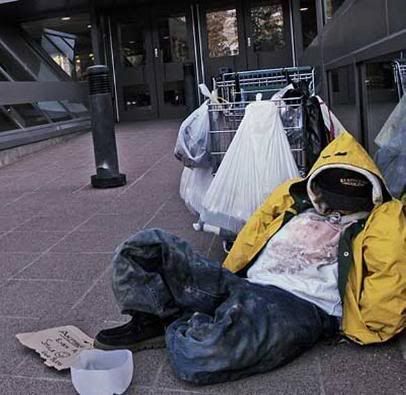
No, instead the question he asks -- and the standard he holds us to -- is quite simple: What did you do for the least among us, for the poor, the hungry, the homeless, the ill?


And I wonder how a Christian Capitalist answers this question. But I believe I already know.

Monday, November 21, 2011

On This Date in 1511...

In 1494, shortly after Columbus "discovered" the new world, Pope Alexander VI divided up the new discoved lands between Spain and Portugal. The Church itself had a vested interest in the new lands; they were converting by the sword and extending their influence beyond Rome and Europe.

On November 21, 1511, Antonio de Montesinos, a Dominican Friar from Spain, attempting to free the Indians from the slavery to which the Spanish -- both military and clerical -- had reduced them, preached an incendiary sermon which incurred the wrath of many Spanish Catholics -- incendiary in the sense that his soul was on fire, ignited by truth. For his efforts he became an object of Spanish persecution.


I am the voice of one crying in the wilderness. In order to make your sins known
to you I have mounted this pulpit, I who am the voice of Christ crying in the
wilderness of this island; and therefore it behooves you to listen to me, not
with indifference but with all your heart and senses; for this voice will be the
strangest, the harshest and hardest, the most terrifying that you ever heard or
expected to hear…This voice declares that you are in mortal sin, and live and
die therein by reason of the cruelty and tyranny that you practice on these
innocent people. Tell me, by what right or justice do you hold these Indians in
such cruel and horrible slavery? By what right do you wage such detestable wars
on these people who lived mildly and peacefully in their own lands, where you
have consumed infinite numbers of them with unheard of murders and desolations?
Why do you so greatly oppress and fatigue them, not giving them enough to eat or
caring for them when they fall ill from excessive labors, so that they die or
rather are slain by you, so that you may extract and acquire gold every day? And
what care do you take that they receive religious instruction and come to know
their God and creator, or that they be baptized, hear mass, or observe holidays
and Sundays? Are they not men? Do they not have rational souls? Are you not
bound to love them as you love yourselves? How can you lie in such profound and
lethargic slumber? Be sure that in your present state you can no more be saved
than the Moors or Turks who do not have and do not want the faith of Jesus
Christ.

His sermon provoked great resentment among the Spanish Conquistadors, much as the anti-war, anti-corporate rhetoric of the Christian "left" and the Occupy Movement incites resentment among the modern, global Conquistador class. Montesinos was accused of preaching heresy by a church hierarchy tainted by Spanish gold. Yes, the church and the elite of society, who controlled the wealth and profited from the exploitation of the weak, called Montesino's sermon, which called for justice based on the inherent equality of the immortal soul, "heretical." The more things change, the more they stay the same.

However, after hearing Montesinos preach, a Spanish priest by the name of Bartolomeo de Las Casas had a conversion experience. He saw the truth in Montesinos's words. In 1514, he became a Dominican Friar, freed his Indian slaves, and began a quest to ban slavery and bring justice to the Americas. He condemned the use of torture and coercion in the evangelization of the people of the new world. Las Casas helped to draft laws which banned slavery. Until the end of his life, Las Casas continued to speak out but he had few supporters. I'm not surprised. Do not expect people to rally around you when you are speaking the truth about their -- and your -- common human imperfections. No one wants to hear they're doing the wrong thing. No one wants to think that God is NOT on their side.

Montesinos and Las Casas were prophets, as Martin Luther King, Jr. was a prophet, and Oscar Romero was a prophet. And prophets don't live long. To paraphrase Leo Rosten, conservatives make heroes out of prophets only after they've martyred them. Today is the anniversary of a simple man's simple message of justice. Montesinos was a prophet belonging to a preaching order with a history of fighting heresies.Today's heresies include inequality, injustice, exploitation and the ascendancy of an omnipotent self-interest over the common good.

Wanna fight?

Tuesday, December 30, 2008

The Bush Legacy -- a Reality Check

The "legacy" of the Bush presidency is one of failure -- failed policies, failed worldview, failure to uphold the Constitution, failure to respect the will of the people -- utter failure.

This legacy includes:

On the plus side, perhaps we'll see, as a result of Bush's disastrous presidency, an attenuation of

This is just scratching the surface. We're only up to May of 2005. More to follow as the Bush presidency dwindles.

Thursday, May 24, 2007

Poll : Lugo Ahead in Paraguay

An update on the "New Axis of Evil"TM
Photo Sharing and Video Hosting at Photobucket
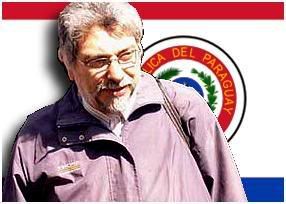
Fernando Lugo, a former Roman Catholic Bishop of a poverty-stricken Paraguayan Diocese, yet still strongly influenced by the "liberation theology" of the Latin American Catholic Church of the 1980s, maintains the lead in the race for Paraguay's 2008 Presidential election.

Lugo, "the Bishop of the poor," is leading all other candidates -- including that of the ruling Colorado party, likely to be current President Nicanor Duarte Frutos. The Colorado Party is the party of Gen. Alfredo Stroessner, the right-wing autocrat who ruled Paraguay as a dictatorship for 35 years, from 1954 through 1989.

Lugo is supported by nearly forty-one percent of the respondents in a poll taken by COIN/Ultima Hora. The candidate of the ruling "Colorado Party" (National Republican Association -- ANR), Luis Castiglioni, was preferred by 16.3%.

Wednesday, April 04, 2007

Kiwi Green Party : War on Poverty as Urgent as War on Terror

An Update on the so-called "War on Terror"TM

Photo Sharing and Video Hosting at Photobucket

As Peter Munya, the US Conference of Catholilc Bishops, John Edwards, Hugo Chavez, Fernando Lugo, Desmond Tutu, Charles Dickens, Muhammed Yunus, and I have been saying for years now, you can't win a war on terror if you don't fight a war on poverty. For the record, the late Holy Father Pope John Paul II believed this too.

Now the New Zealand Green Party Foreign Affairs Spokesperson Keith Locke has said the same thing. And he's right. And he's taking his government to task.

Whenever the Government supports laws to combat global terrorism, it routinely invokes UN guidelines on the subject as a rationale, even when that sometimes means restricting the civil liberties of New Zealanders. Yet when it comes to UN initiatives aimed at combating global poverty, the Government has been willing to drag its feet.

In years past, the Prime Minister Helen Clark has acknowledged the links that exist between terrorism and its breeding grounds in poverty, inequality, disease and lack of opportunity. The Government should be treating global poverty with the same urgency it currently affords to global terrorism.

This era of global apathy and global greed has to end. This era of global, un-regulated, laissez faire, "free-market" capitalism has to end. Rational regulation was just as much a part of Adam Smith's vision as irrational speculation.

Democracy, NOT plutocracy.

Friday, March 30, 2007

Kenyan Security Minister : Poverty Fueling Terror in Africa

Howie and his ilk on the right don't want to hear this. But more and more people are coming to the realization that poverty and terrorism are intimately connected.

Photo Sharing and Video Hosting at Photobucket


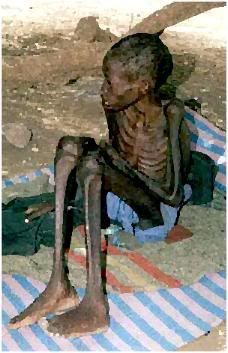
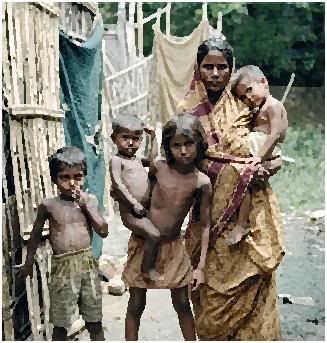
Are we fighting a war on terror or not? If so, we've got to fight the root causes of terrorism, including poverty, malnutrition, inequality, and exploitation. If we have the nerve to call ourselves a "Chritian nation," we damned well ought to behave like one.

Wednesday, March 21, 2007

Jesus Was NOT a Socialist...BUT...

Photo Sharing and Video Hosting at Photobucket
The Catholic principle of apostolic succession means, among other things, that there is an unbroken line of apostles from the original twelve until today. It also means that Bishops (and this of course includes the Pope in his role as Bishop of Rome) have a particular authority to teach. This authority is exercised in pastoral letters (on the episcopal level) and encyclicals (a Pope's teaching to the entire church). In fairness to the subject, it is also used as an excuse to keep women from being ordained.

But those who call themselves "Catholic" ignore Church teaching at their own peril. So here's what the US Conference of Catholic Bishops had to say to Congress (all emphases mine).
Do not forget or neglect the needs of the poor and vulnerable in the United States and throughout the world in setting budget priorities, U.S. bishops urged Congress, noting that they have responsibility to meet the common good.
Common good? You still talking about that? Didn't we get rid of that useless concept in the 1980s? No, say the Bishops. Decisions about spending have to be made on the basis of more than "economic policy."
“Meeting essential human needs is a compelling ethical and fiscal priority,” he said. “A moral measure of the budget will be how it treats poor and vulnerable people.”
The Bishops questioned the morality of tax cuts that benefit the rich while putting an undue burden on the middle class and jeopardizing the well-being of the poor.
“When the basic requirements of human life and dignity for many in our country and throughout the world go unmet, it is essential that adequate federal revenues be available to help meet these basic human needs,” he said.
Deficit spending on things like, well, war also limit the amount of money that can be spent on providing for the common good.
The budget should, he said, provide “adequate funding” for programs that help families “escape hunger and homelessness, find decent housing and employment and have access to quality education and medical care.”
This is important not just at home; the common good extends beyond our shores.
He also pointed to strengthening the U.S. government commitment to foreign aid, including relief, developmental and health-care assistance throughout the developing world “where people live with crushing poverty and diseases” and forced to flee “violence and persecution.” “Your budget choices have clear moral and human dimensions,” he said. “They reflect our values as a people.”
Amen.
“The weak and vulnerable,” he said, “do not have powerful lobbyists.”
Alleluia.

Wednesday, February 28, 2007

Catholic Bishop Could Win Paraguayan Presidency

An update on the "New Axis of Evil"TM

Photobucket - Video and Image Hosting

A former Roman Catholic Bishop, strongly influenced by the "liberation theology" of the Latin American Catholic Church of the 1980s, is the front-runner in the race for Paraguay's 2008 Presidential election.

Fernando Lugo, "the Bishop of the poor," is leading all other candidates -- including that of the ruling Colorado party, likely to be current President Nicanor Duarte Frutos. The Colorado Party is the party of Gen. Alfredo Stroessner, the right-wing autocrat who ruled Paraguay as a dictatorship for 35 years, from 1954 through 1989.

Lugo, the Bishop of San Pedro for ten years until his resignation in 2005, is seen as a fighter for social justice and an advocate for the poor. He resigned from the priesthood in December of 2006 in order to run for the Presidency. Opponents on the right attempt to link him with Hugo Chavez and Evo Morales. Lugo disagrees:
For me, the value of the Venezuelan experiment is the social dimension, the better distribution of wealth for the benefit of the poor majority.
But, in his view, Chavez's method is inappropriate since it is
linked to a strong dose of statism, totally at the service of one person
which
is dangerous for a real democracy.
He sees himself not as of the left or the right, but of the people:
As I am accustomed to saying, hunger and unemployment, like the lack of access to health and education, have no ideology.
He notes that
there are too many differences between the small group of 500 families who live with a first world standard of living while the great majority lives in a poverty that borders on misery.
Both the Roman Catholic Church and the Paraguayan Church appear to be conspiring to keep Lugo from being elected. Cardinal Giovanni Battista Re, Prefect of the Congregation for Bishops, denied Lugo's request, founded in Canon Law, that he be released from the priesthood for "the common good." His only altertnative, according to Catholic Canon lawyers who reviewed the case, is apostasy and excommunication. Similarly, the Paraguayan Constitution forbids clergy to run for office, and the Church's refusal to release Lugo from his priestly duties might be used as a Constitutional argument to disqualify him.